
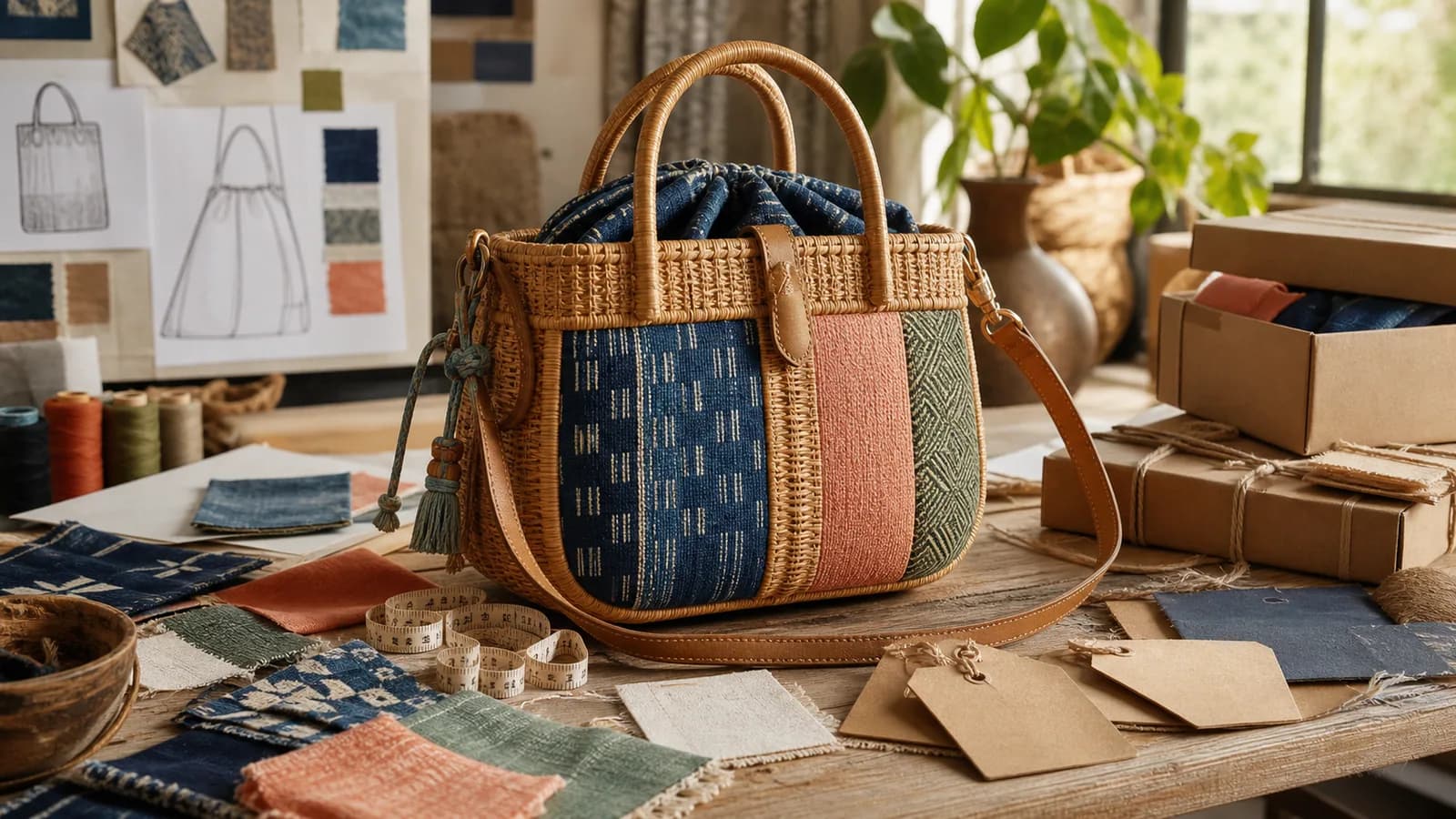
The bags sold by St. Martins Apparel begin in the Philippines and reach customers through a student team in Hong Kong.
Ella, Francesca and Tallie, three students at The Harbour School, built the venture with two Philippine nonprofits: Bahay at Yaman Ni San Martin De Porres and Casa Bantu. Students in the Philippines source materials and make handbags from textile waste and natural rattan. The Hong Kong team manages sales and wider operations.
In May, St. Martins Apparel took second place in the Social Innovation track at the 2026 Diamond Challenge Global Finals.
Cross-border projects can sound impressive while leaving one side to make all the important decisions. St. Martins Apparel says it is trying a more collaborative model.
The Harbour School students teach design thinking to their Philippine partners, then use the process together to develop products. The venture combines a physical product with entrepreneurship training, rather than treating the bags as a simple fundraising item.
The arrangement creates real business questions. Who chooses the design? How is a bag priced? What is paid for materials and labour? Who owns the brand, and how is money shared?
The available sources do not answer all of them. They do show that the bags reached a retail channel at Asia Society Hong Kong, moving the project beyond a pitch deck.
The Harbour School says 7,492 teams from 137 countries entered the 2026 Diamond Challenge and that St. Martins Apparel became the first Hong Kong team to earn a podium place. The Diamond Challenge lists the venture as its second-place Social Innovation winner, a prize tier worth $8,000.
That result recognises the concept and presentation. It does not yet measure whether the venture produces steady income or lasting benefits for its Philippine participants.
Those outcomes will depend on the less visible work after the final: fulfilling orders, recording costs, sharing decisions and ensuring the partnership remains fair as sales grow.
Tradeoffs
- A cross-border partnership can reach more customers, but fair decisions about work, ownership and revenue become more complex.
- Using waste textiles reduces demand for new material, but does not by itself prove the whole product is sustainable.
Try this
What would you ask each partner to check whether this venture is sharing value as well as work?