
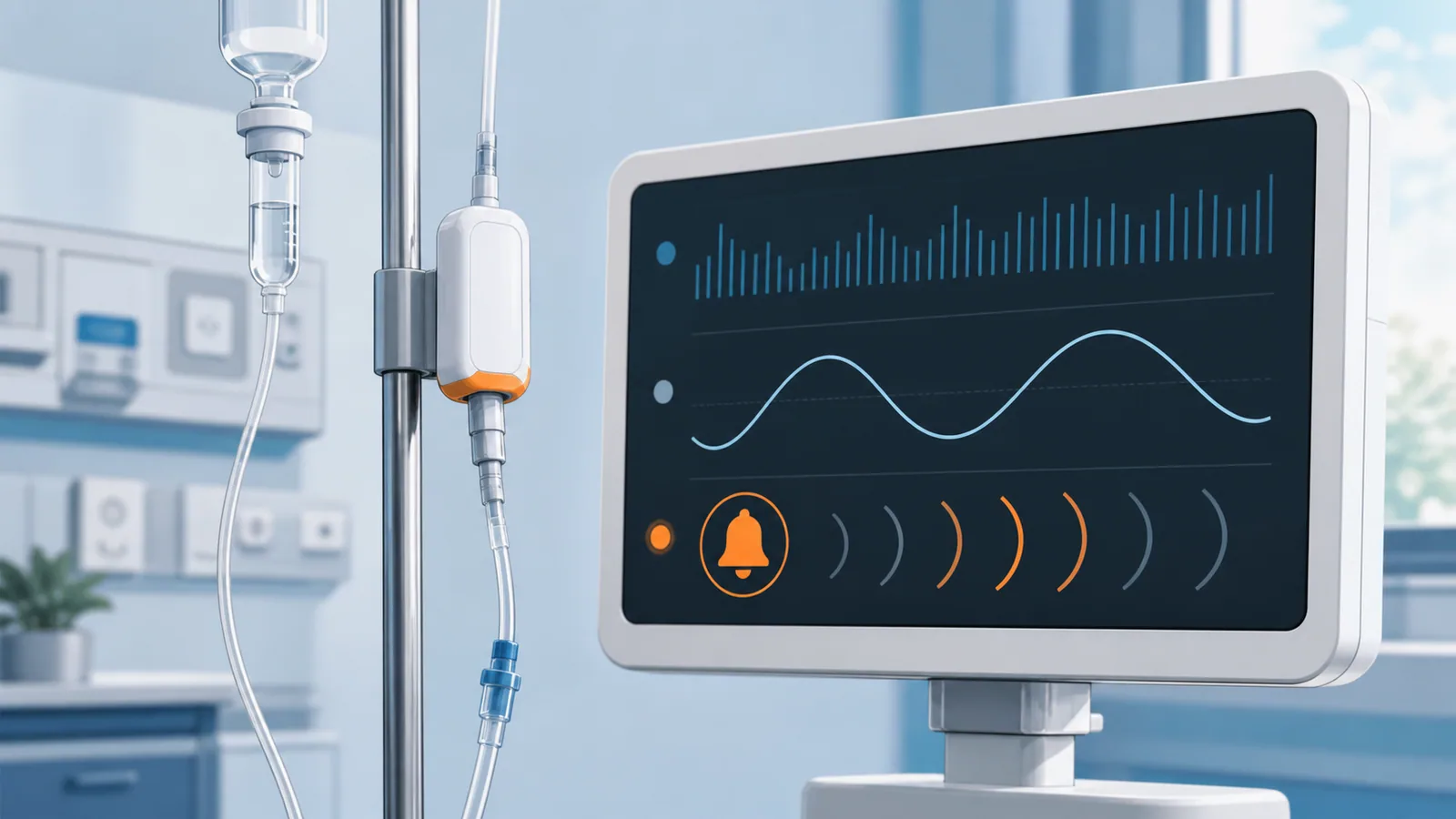
Hospital alarms are designed to attract attention. When too many sound for the wrong reasons, staff can begin to tune them out.
Riya Koya and Zaina Khan, students at Carmel High School in Indiana, focused on one part of that problem: intravenous lines. An IV can become blocked or restricted, but a standard alarm may not have enough context to tell staff exactly what is happening.
The pair founded OccluSense, a venture built around pressure analysis for IV systems. Their proposal uses pressure patterns to identify possible occlusions and reduce unnecessary alarms.
On 23 June, they pitched the idea at the STARTedUP Challenge Finals at Butler University. OccluSense took first place and received $25,000 in seed funding.
The venture did not begin with a broad promise to “fix healthcare”. It concentrated on a repeated event inside a specific piece of hospital equipment.
That focus made the business case easier to understand. Hospitals already use IV systems and already respond to their alarms. OccluSense is proposing a better way to interpret pressure, not asking staff to adopt an entirely unrelated process.
The competition described the goal as reducing alarm fatigue and preventing harm caused by missed or poorly interpreted IV problems. Those are the team’s intended outcomes. They still need clinical evidence.
The 2026 STARTedUP Challenge received entries from 1,174 teams representing 2,162 students. Ten finalist teams completed a bootcamp and pitched to business leaders and investors.
The $25,000 award gives OccluSense money to continue development. It is not the same as regulatory approval, a hospital contract or proof that the system improves patient outcomes. Medical products face a longer road because mistakes can affect people’s health.
That makes the founders’ next decisions important: how to test the pressure analysis, where the device fits into existing systems, what evidence hospitals need and which claims can be supported at each stage.
Koya and Khan have already achieved something concrete. They turned a technical hospital problem into a venture that survived a large competition, reached an investor-facing final and secured its first reported seed funding.
Tradeoffs
- A more selective alarm could reduce noise, but missing a true blockage would carry serious risk.
- Seed funding can accelerate development, while medical validation and regulation must still set the pace.
Try this
What evidence should a hospital demand before allowing a new alarm system near a patient?